Step by Step Landscape Painting DemoOil Painting, Free Art Instruction - Part 1 of 2 |
||||||||||||||||
Oil Painting Demonstration of "Sand Creek"Scroll down for step-by-step photos and information. This demonstration shows the process I use in my studio when I create a larger studio landscape painting based on a smaller painting that I completed in the field. Below is the 9" x 12" plein air painting that I used as my source. Incidentally, continual plein air painting is an invaluable source of information to me as I make decisions while painting in the studio. 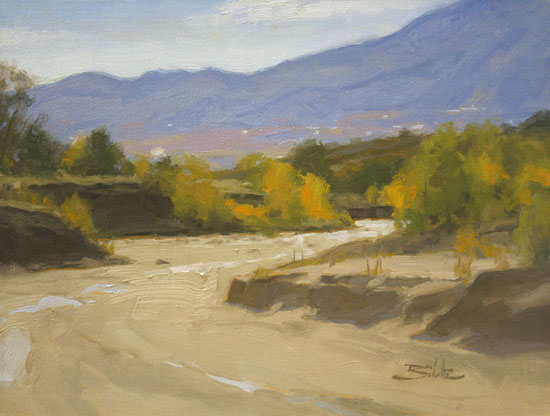
Step 1: Prepare to PaintFor this 18" x 24" studio painting I used Claessens double-oil-primed linen canvas, #15 (my usual painting surface), mounted on 1/2" Gator Board. I applied an initial wash to the canvas with a color that I hoped would end up being pretty close to my final color for the creek bed in the foreground. I don't use any medium with my paint, just mineral spirits (Gamsol made by Gamblin) that I sometimes use to thin the paint (which I did for the initial wash, then lightly wiped it with a paper towel). I also laid out all my palette colors (listed below). 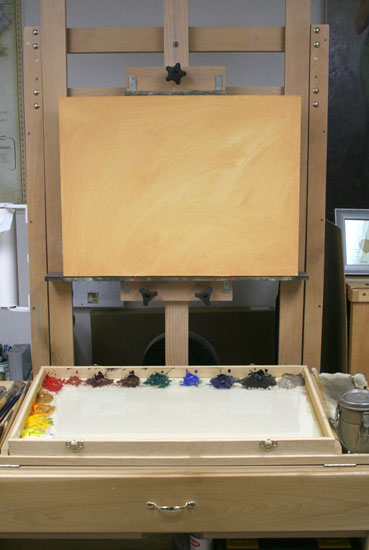
Brushes:Holbein Killington bristle flats and Utrecht bristle flats, sizes 2 - 12 Paint:(Starting from the bottom left on my palette and working upwards and to the right.) 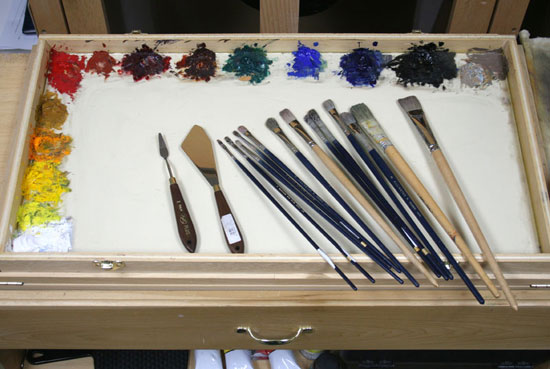
Step 2: Draw the Scene on the CanvasUsing a #4 Holbein Killington bristle flat brush, I used some of the gray mixture on my palette to draw my scene. (It really doesn't matter much what color is used for the drawing since it will eventually be covered up anyway. I usually just try to use a color that isn't too intense and that is dark enough in value for me to see it over the initial wash.) I thinned the paint with some mineral spirits so that it would flow off my brush easily and tried to keep the drawing simple and accurate. 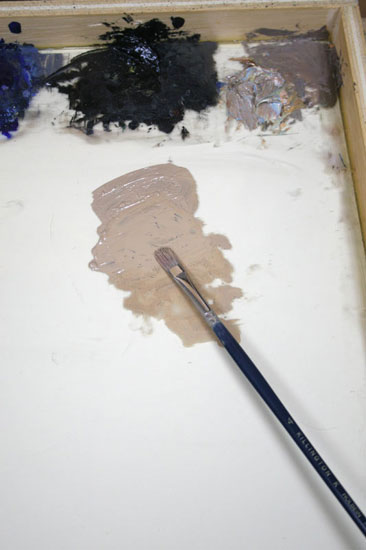 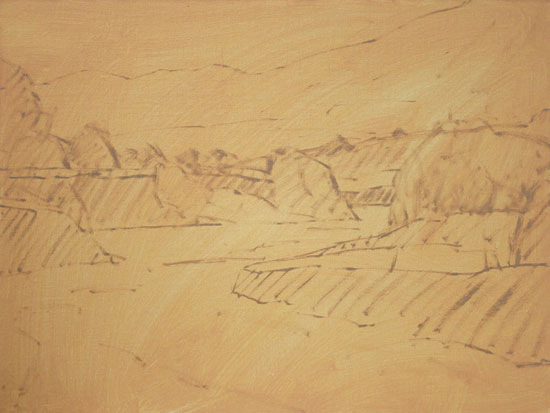
Step 3: Start the Block-InMy next step was to determine the color and value of my darker foreground shadows and to mix it right next to the color I used for the drawing step. I had already decided that I wanted those shadows to be lighter than I had painted them in the plein air painting, so I compared the shadows between the two paintings to make sure I was on the right track. I used a #6 Utrecht bristle flat brush for these block-in steps while being careful to keep my paint consistency just thick enough to cover each area. (I apply thicker paint in certain areas later in the process.) 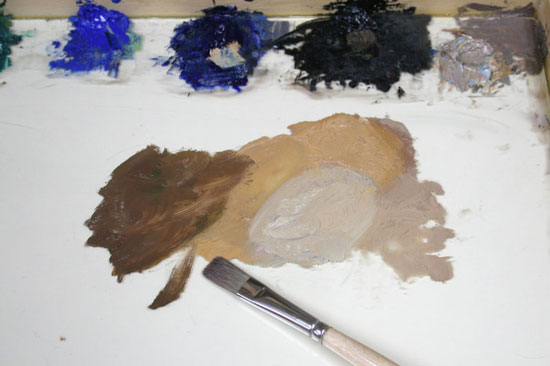 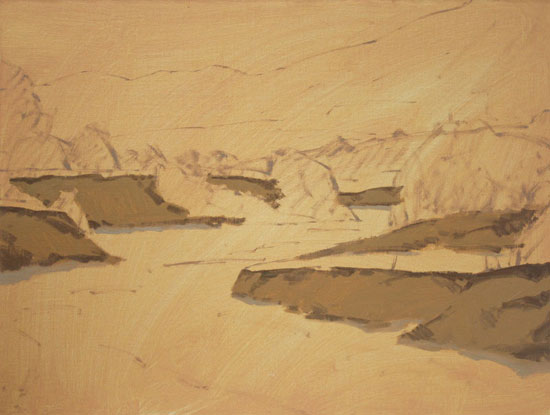 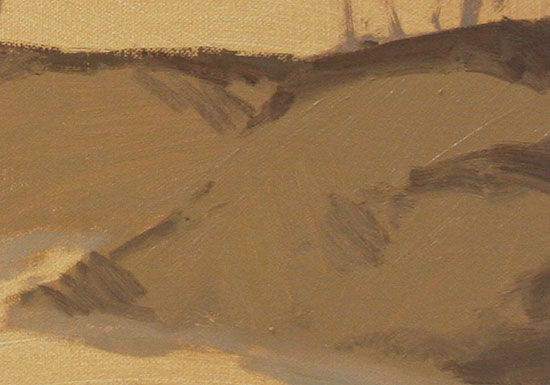
Step 4: Continue the Block-InI then continued to the shapes next to the shadows and blocked them in with the approximate values and colors of each shape. (Notice that I continue to mix the colors on my palette right next to (touching) the other colors. This allows me to squint and compare the values right on my palette, then I can double-check value and color accuracy once I block in the shapes on the canvas.) Throughout this process, I did a lot of squinting at my palette mixtures, my source painting and at the larger painting to compare the value relationships between shapes. 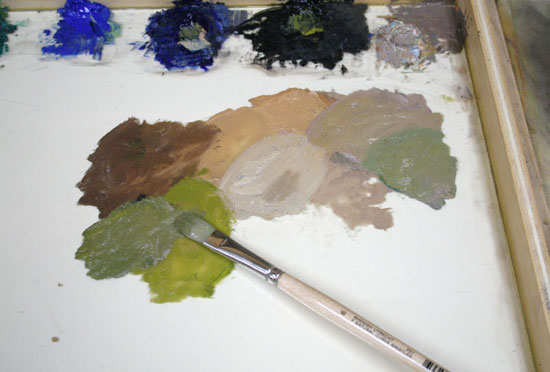 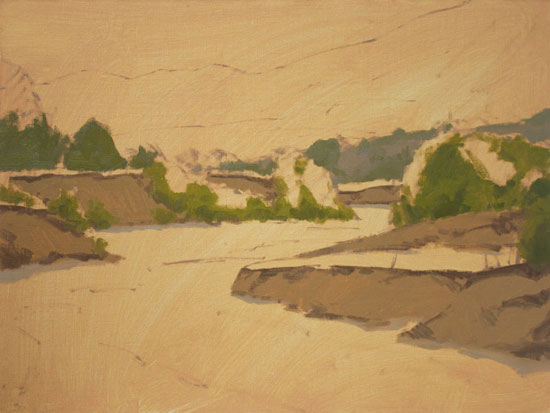
Step 5: Continue the Block-InNext, I continued by blocking in the mountain areas while trying to keep them simple. I wanted to get the majority of the canvas covered with the most accurate values and colors I could before I got into much detail. (It gets easier to accurately compare values and colors as more of the canvas gets covered.) Notice that I continued to work outward from my initial block-in areas to the areas next to them. 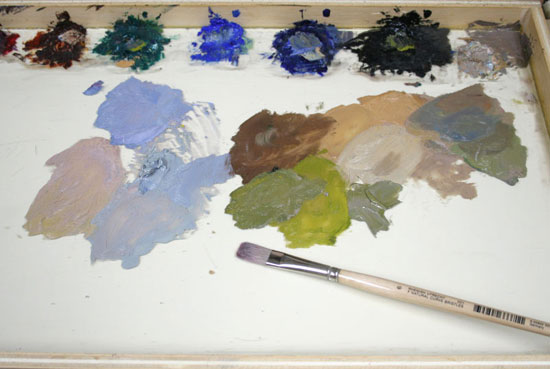 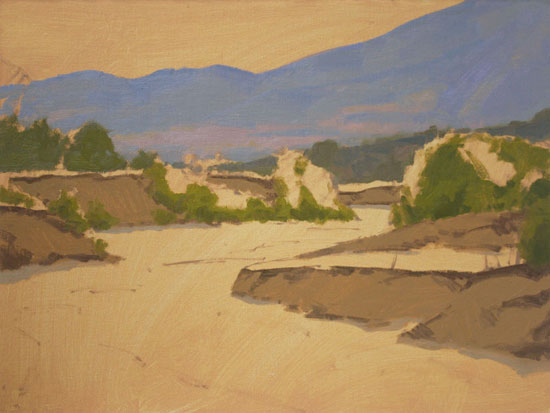 Click to View PART TWO of the OIL PAINTING LANDSCAPE DEMO
By Dan Schultz
Click to View PART TWO of the OIL PAINTING LANDSCAPE DEMO
By Dan SchultzTutorial is copyright of Dan Schultz
|
||||||||||||||||


 |